OUR BLOGS
Carbon Solutions. Industry
Trends. Expert Advice.
Activated Carbon HSN Code, GST Classification and Export Documentation in India
Key Highlights The correct HSN code for activated carbon in India is 3802 10 00 under the Customs Tariff Act, Chapter 38. Activated carbon attracts an 18% GST rate at both the domestic supply and import stages under IGST provisions. Export of activated carbon from...
Activated Carbon Manufacturing Process: Carbonisation, Steam Activation and Pore Development Explained
Key Highlights Activated carbon is manufactured by carbonising a carbonaceous precursor (coconut shell, coal or wood) followed by physical or chemical activation to develop porosity. Steam activation reacts char with steam at 800-1000 degrees C, selectively burning...
Activated Carbon Price Factors: Raw Material, Iodine Number, Mesh Size, Ash Content and Order Volume
Key Highlights Raw material source (coconut shell, coal, wood) is the primary activated carbon price driver, with coconut shell commanding a 20 to 40 percent premium over coal-based grades. Iodine number directly reflects micropore surface area; each step up in grade...
Activated Charcoal in Cosmetics and Personal Care: Ingredient Grades, Particle Size and Heavy Metal Limits for Formulators
Key Highlights The INCI name for activated charcoal in cosmetics is "Carbon, Activated" and it is a permitted ingredient under EU Cosmetics Regulation 1223/2009. Cosmetic, pharmaceutical and industrial activated carbon grades differ substantially in heavy metal...
Impregnated Activated Carbon: Sulphur, Potassium Iodide, Copper and Alkali Treatments for Specific Gases
Key Highlights Impregnated activated carbon combines physical adsorption with chemical reaction to target specific gas-phase contaminants that standard carbon cannot remove effectively. Sulphur impregnation converts elemental mercury vapour to stable mercuric...
Activated Carbon in Sewage Treatment Plants: Odour Control and Tertiary Filtration After Biological Treatment
Key Highlights Sewage treatment plants produce odorous compounds including H2S, mercaptans and ammonia that activated carbon captures in fixed-bed scrubbers before off-gas is vented. Biological treatment stages alone do not reliably remove micropollutants, colour,...
Activated Carbon in Effluent Treatment Plants: Tertiary Polishing for COD, Colour and Odour Removal
Key Highlights Activated carbon tertiary polishing removes 60-85% of residual COD after biological treatment in ETPs GAC fixed-bed filters and PAC dosing are the two principal application methods, each suited to different plant configurations Colour removal from...
Activated Carbon in Edible Oil Refining: Bleaching, Colour and Contaminant Removal Stages
Key Highlights Activated carbon is added to bleaching earth at 2 to 10 percent by weight to remove trace contaminants from crude vegetable oils during refining. Powdered activated carbon reduces polycyclic aromatic hydrocarbons (PAHs), dioxins, pesticide residues and...
Mercury and Heavy Metal Removal Using Activated Carbon: Mechanisms and Industry Standards
Key Highlights Sulphur-impregnated activated carbon is the industry standard for elemental mercury removal from coal plant flue gas, achieving over 90% capture efficiency. The US EPA MATS rule requires coal-fired power plants to meet mercury emission limits of 1.2 to...
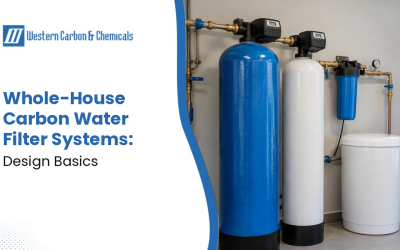
Whole-House Carbon Water Filter Systems: Design Basics | Western Carbon
Key Highlights A whole-house carbon filter treats all water entering a building, so it must be sized for peak flow, not average use. Empty bed contact time sets the carbon volume, and chloramine needs far more contact time than free chlorine. Tank diameter and bed...
What Is Activated Carbon? An Industrial Primer | Western Carbon
Key Highlights Activated carbon is a carbonaceous material processed to develop an enormous internal pore network. Raw material and activation method decide pore structure, hardness, ash and cost. Key specifications include iodine number, CTC or butane activity,...
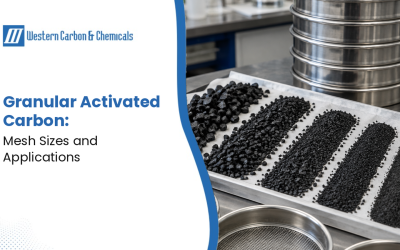
Granular Activated Carbon Mesh Sizes and Applications | Western Carbon
Key Highlights Mesh size describes the range of granule sizes in a carbon, using sieve numbers such as 8x30 or 12x40. A higher mesh number means smaller granules, faster adsorption, and higher pressure drop. Water treatment commonly uses 8x30 or 12x40, and...
Granular Activated Carbon Filter Design: A Practical Guide | Western Carbon
Key Highlights GAC filter design starts from the contaminant, the target outlet concentration and the design flow. Empty bed contact time sets carbon volume, and surface loading rate sets vessel diameter. Bed depth, free board, underdrain and distributor design decide...
Catalytic Carbon Filter: Chloramine and H2S Removal | Western Carbon
Key Highlights Catalytic carbon is activated carbon with an enhanced surface that speeds up chemical reactions, not just adsorption. It removes chloramine much faster than standard GAC, which needs long contact time to do the same job. It converts hydrogen sulphide,...
Carbon Water Filter: What It Removes and What It Doesn’t | Western Carbon
Key Highlights A carbon water filter removes contaminants by adsorption and, for free chlorine, by a catalytic surface reaction. It is strongest on chlorine, taste, odour, colour, many solvents, pesticides and other organic chemicals. It does not reliably remove...
Carbon Block Filter vs GAC: Which for Which Application | Western Carbon
Key Highlights Granular activated carbon (GAC) is loose media in a bed, while a carbon block is compressed carbon bonded into a solid shape. GAC suits higher flows, deep beds and backwashable systems, and carbon blocks suit compact point-of-use cartridges. Blocks give...
Activated Carbon in Aquaculture and Aquarium Systems | Western Carbon
Key Highlights Carbon in aquatic systems removes chlorine, chloramine, dissolved organics, colour, odour and some medications. It does not remove ammonia or nitrite, which are handled by biological filtration. In recirculating aquaculture it polishes water and removes...
Activated Carbon for Air Purifiers: What to Specify | Western Carbon
Key Highlights Particle filters and carbon do different jobs, so a purifier needs both to handle smoke, dust and gases. The weight of carbon in the filter, not its colour or thickness, is the best first indicator of gas capacity. Specify carbon by activity (carbon...
Activated Carbon Filtration: Process Design Fundamentals | Western Carbon
Key Highlights Carbon filtration design starts from adsorption equilibrium (isotherms) and kinetics, not from vessel catalogues. The mass transfer zone, contact time and carbon usage rate decide how long a bed lasts and what it costs. Fixed-bed granular carbon and...
Activated Carbon Filter: How It Works and When to Replace It
Key Highlights An activated carbon filter cleans by adsorption, bonding contaminant molecules to the carbon surface, not by straining them by size. The real end-of-life signal is breakthrough, not the calendar. Reappearing chlorine taste, odour, or colour is the...
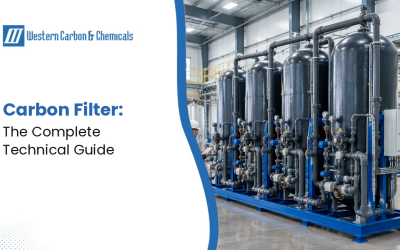
Carbon Filter: A Complete Technical Guide (2026)
Key Highlights A carbon filter cleans water and air by adsorption, trapping molecules on the vast internal surface of activated carbon rather than sieving them out. One gram of quality activated carbon can offer 500 to 1,500 square metres of internal surface area. The...
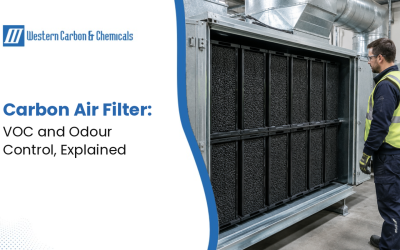
Carbon Air Filter: VOC and Odour Control Explained | Western Carbon
Key Highlights A carbon air filter removes gas-phase pollutants by adsorption, not by physical straining like a particulate filter. VOC control is measured against concentration limits, while odour control targets human perception at far lower levels. Extruded pellet...
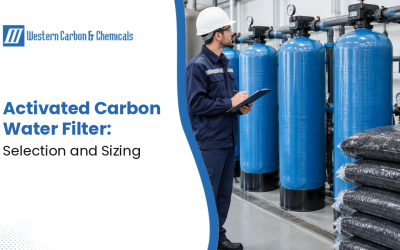
Activated Carbon Water Filter: Selection and Sizing | Western Carbon
Key Highlights Activated carbon water filters remove chlorine, taste, odour, colour and many dissolved organics by adsorption and catalytic reaction. They do not remove salts, hardness, nitrate or most metals, so carbon is a polishing stage, not a universal fix....
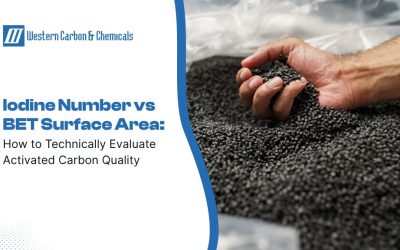
Iodine Number vs BET Surface Area: How to Technically Evaluate Activated Carbon Quality
Key Highlights The iodine number (ASTM D4607) measures micropore adsorption capacity in mg/g and is the fastest field-usable quality test for activated carbon. BET surface area measures total internal surface in m2/g using nitrogen adsorption and provides a complete...
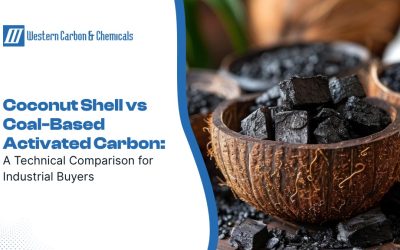
Coconut Shell vs Coal-Based Activated Carbon: A Technical Comparison for Industrial Buyers
Key Highlights Coconut shell carbon is predominantly microporous with hardness numbers of 97 to 99+, making it the top choice for potable water and gold recovery applications. Coal-based carbon has a broader pore size distribution with significant mesopore content,...
Carbon-in-Leach vs Carbon-in-Pulp: Choosing the Right Activated Carbon Grade for Gold Recovery
Key Highlights CIL (Carbon-in-Leach) runs leaching and adsorption simultaneously; CIP (Carbon-in-Pulp) separates the two stages, completing leaching first before introducing carbon. CIL is preferred for preg-robbing ores where natural carbonaceous material in the ore...
Acid-Washed Activated Carbon: Why Ash Content and pH Matter for Sensitive Applications
Key Highlights Acid washing removes inorganic ash from activated carbon using mineral acid, reducing ash content from 6 to 14% (unwashed coal) or 2 to 4% (unwashed coconut shell) to below 1.5 to 3%. The pH of acid-washed carbon's aqueous filtrate falls between 3 and...
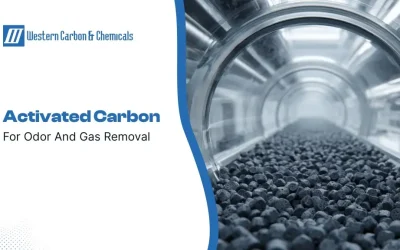
Activated Carbon for Odor and Gas Removal
✅ Key Highlights Activated carbon removes odors and gases through physical adsorption — not combustion, masking, or particle filtration. A single gram of quality activated carbon can have a surface area exceeding 1,000 m² — roughly four tennis courts in a teaspoon....
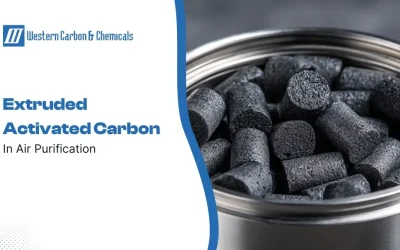
Extruded Activated Carbon in Air Purification
Introduction to Extruded Activated Carbon Extruded Activated Carbon (EAC) is a highly engineered form of activated carbon renowned for its uniformity and mechanical robustness. Unlike granular or powdered carbon, EAC is meticulously shaped into cylindrical pellets,...
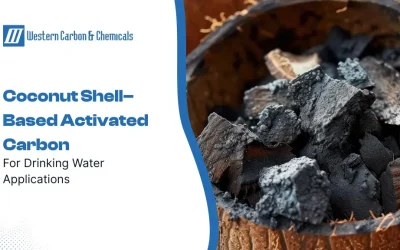
Coconut Shell–Based Activated Carbon for Drinking Water Applications
Introduction to Activated Carbon in Water Purification Drinking water purification is a silent yet vital process that occurs long before the water reaches your faucet. At the heart of many purification systems lies activated carbon — a remarkable adsorbent that...