 Summarize this Article with AI
Introduction to Activated Carbon in Water Purification
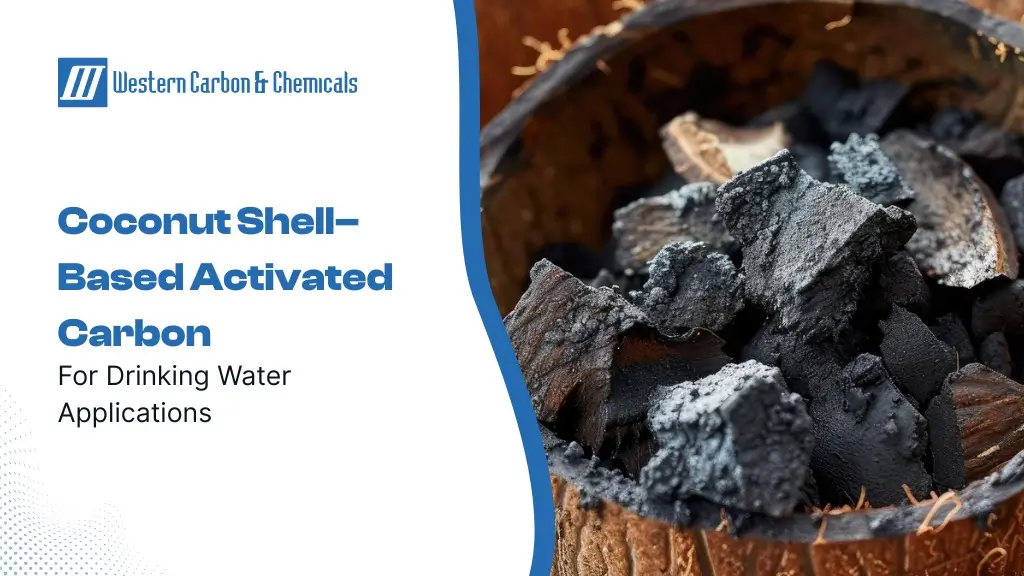
Drinking water purification is a silent yet vital process that occurs long before the water reaches your faucet. At the heart of many purification systems lies activated carbon — a remarkable adsorbent that captures impurities with impressive efficacy. Activated carbon isn’t just a buzzword; it’s a cornerstone material in advanced water treatment. Among its various forms, coconut shell–based activated carbon has gained traction for potable applications.
Why Coconut Shell–Based Activated Carbon Matters
Coconut shell–based activated carbon stands out because of its origin, performance, and sustainability profile. Unlike other carbon sources, it begins life as a renewable agricultural byproduct. The result is an activated carbon with a high surface area and finely developed porosity, traits that make it exemplary for adsorbing undesirable substances from drinking water.
Historical Context of Coconut Shell Carbon Use
The use of carbon materials for purification dates back centuries, but coconut shells have been harnessed with intention more recently. Historically, the quest for improved water quality drove research into more efficient adsorbents, and coconut shell carbon consistently demonstrated superior performance compared to many traditional media. Its ascension into modern water treatment systems reflects both tradition and innovation.
The Unique Physicochemical Properties of Coconut Shell Carbon
The intrinsic properties of coconut shell carbon are what make it truly remarkable. It possesses a dense micro‑pore structure that equates to an enormous internal surface area — often exceeding 1,000 square meters per gram. This labyrinthine network of pores facilitates the adsorption of minute contaminants, including organic molecules, chlorine derivatives, and volatile organic compounds.
How Coconut Shell–Based Activated Carbon Is Manufactured
Creating coconut shell carbon begins with careful selection of raw materials. Mature coconut shells are carbonized, then subjected to activation processes that develop their porous architecture. The precise control of temperature, time, and gas composition during activation ensures a product of consistent quality, tailored for drinking water filtration.
Activation Methods: Physical vs Chemical
Activation techniques fall into two broad categories: physical and chemical. Physical activation uses oxidizing gases at elevated temperatures, while chemical methods employ activating agents such as phosphoric acid. Both approaches yield activated carbon, but each influences pore size distribution differently — an important consideration for specific water treatment objectives.
Structural Characteristics That Enhance Adsorption Efficiency
Coconut shell carbon’s structural characteristics underpin its adsorption prowess. It features a predominance of micropores that excel in capturing small organic molecules. This structural advantage enhances its performance, particularly when removing taste and odor compounds or trace organic pollutants that can affect drinking water quality.
Comparison of Coconut Shell–Based Activated Carbon with Other Media
Bituminous Coal–Based Activated Carbon
Bituminous coal–based carbon is another widely used adsorbent. It typically has broader pore structures but a lower micropore volume compared to coconut shell carbon. This makes it more versatile in some industrial applications, yet less effective for certain drinking water contaminants.
Lignite–Based Activated Carbon
Lignite–based carbon has a more amorphous structure and generally lower carbon content. While it can be suitable in bulk contaminant removal scenarios, its performance in potable water systems often trails that of coconut shell–based carbon due to reduced adsorption capacity.
Synthetic Polymer–Based Adsorbents
Synthetic polymer adsorbents can target specific contaminants, yet they often lack the broad‑spectrum efficacy of coconut shell carbon. Additionally, polymer materials may degrade under certain conditions, whereas coconut shell carbon maintains stability and longevity.
Filtration Media Compared for Drinking Water Applications
| Filtration Media | Surface Area | Micropore Volume | Best For | Durability |
|---|---|---|---|---|
| Coconut Shell–Based Activated Carbon | Very High | Very High | Organic contaminants, taste & odor | Excellent |
| Bituminous Coal–Based Activated Carbon | High | Moderate | Large organics, industrial | Good |
| Lignite–Based Activated Carbon | Moderate | Low | Bulk removal | Fair |
| Synthetic Polymer Adsorbents | Variable | Variable | Targeted pollutants | Moderate |
The Science of Adsorption in Water Treatment
Adsorption is a phenomenon wherein molecules adhere to a solid surface. In water treatment systems, contaminants migrate from the aqueous phase and bind to the extensive surface area within the activated carbon matrix. The process is driven by van der Waals forces and occurs without chemical bonding, making it both reversible and efficient.
Role in Removing Organic Contaminants
Coconut shell carbon excels at capturing organic contaminants. These include pesticides, herbicides, and industrial chemicals that persist in water sources. The micro‑porous structure provides ample sites for these molecules to lodge, effectively reducing their concentration in treated water.
Tackling Disinfection Byproducts (DBPs)
Disinfection byproducts such as trihalomethanes (THMs) can form when chlorine reacts with natural organic matter. These compounds pose health concerns if left unchecked. Coconut shell carbon can adsorb these entities, mitigating their presence in drinking water and helping water suppliers meet regulatory thresholds.
Also know: The Role of Anthracite in Modern Water Treatment Systems
Reducing Taste and Odor Impurities
Unpleasant tastes and odors often arise from trace organic compounds or chemical residues. Activated carbon derived from coconut shells can substantially improve sensory qualities by removing these compounds. The result is water that not only meets safety standards but also appeals to the palate.
Heavy Metal Adsorption Capabilities
Though not its primary function, coconut shell‑based activated carbon can assist in reducing certain heavy metals. It does not replace specialized ion exchange media but can contribute to improved water quality when deployed as part of a multi‑barrier approach.
Coconut Shell Carbon in Municipal Drinking Water Systems
Municipal systems require reliable and scalable solutions. Coconut shell carbon is frequently integrated into large treatment plants, where it bolsters the removal of organic load and improves overall water quality. Its stability and performance consistency make it a trusted choice for public systems.
Use in Point‑of‑Use (POU) Filters
For households, point‑of‑use devices often rely on coconut shell carbon cartridges. These compact filters deliver effective taste and odor reduction while removing contaminants before consumption. They are convenient, cost‑effective, and simple to replace.
Integration with Reverse Osmosis and UV Systems
Coconut shell carbon is synergistic with other advanced treatment technologies. When used ahead of reverse osmosis (RO) or ultraviolet (UV) systems, it can reduce fouling and enhance the longevity of downstream components. Pre‑conditioning water in this way optimizes overall system performance.
Performance Metrics and Quality Indicators
Assessing activated carbon involves measuring surface area, pore distribution, and adsorptive capacity. High‑quality coconut shell carbon exhibits a large surface area and a high proportion of micropores — key indicators of superior performance in drinking water scenarios.
Regeneration and Longevity of Coconut Shell Carbon
Over time, activated carbon becomes saturated with adsorbed contaminants. Regeneration restores its adsorptive capabilities. Coconut shell carbon can be thermally reactivated, extending its useful life and promoting resource efficiency.
Sustainability and Environmental Benefits
Coconut shell–based activated carbon represents a sustainable alternative to fossil‑derived media. It utilizes agricultural byproducts, reduces waste, and supports circular economy principles. Its production has a relatively lower environmental footprint, aligning with broader sustainability goals in water infrastructure.